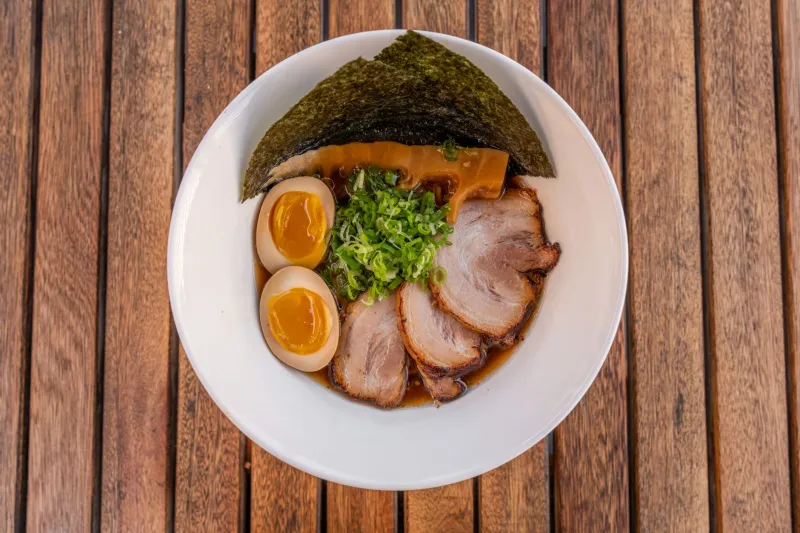
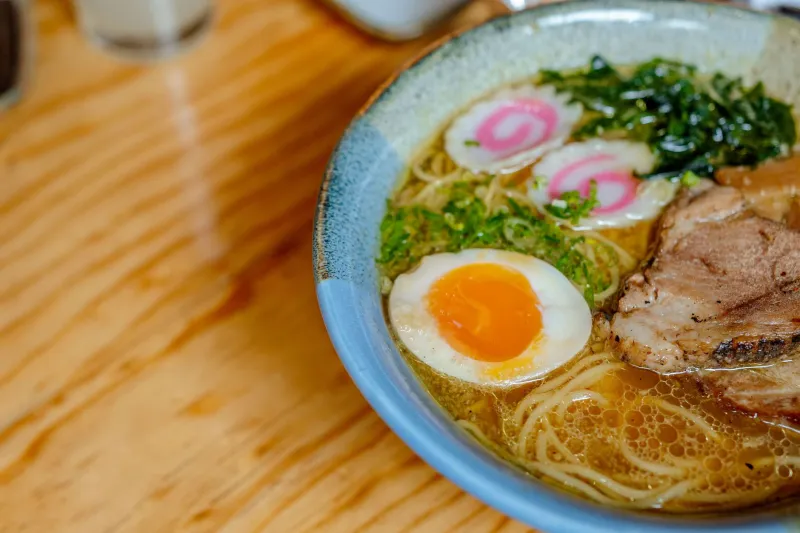
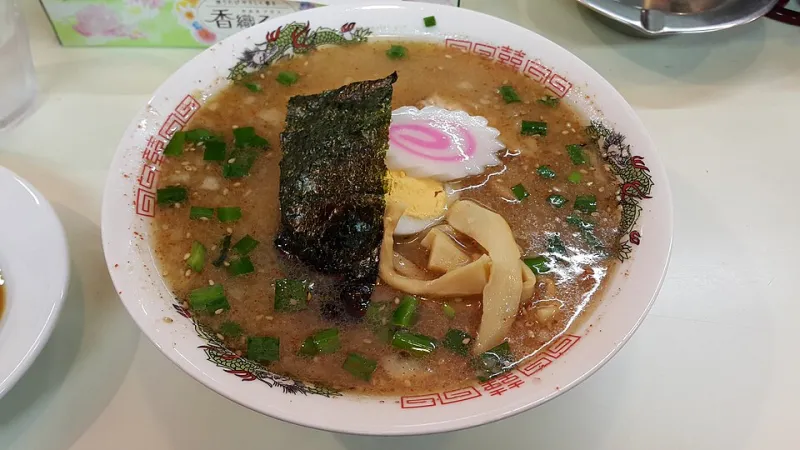
Front Row at the Boiler: The Camden Noodle Counters That Cook in Plain Sight
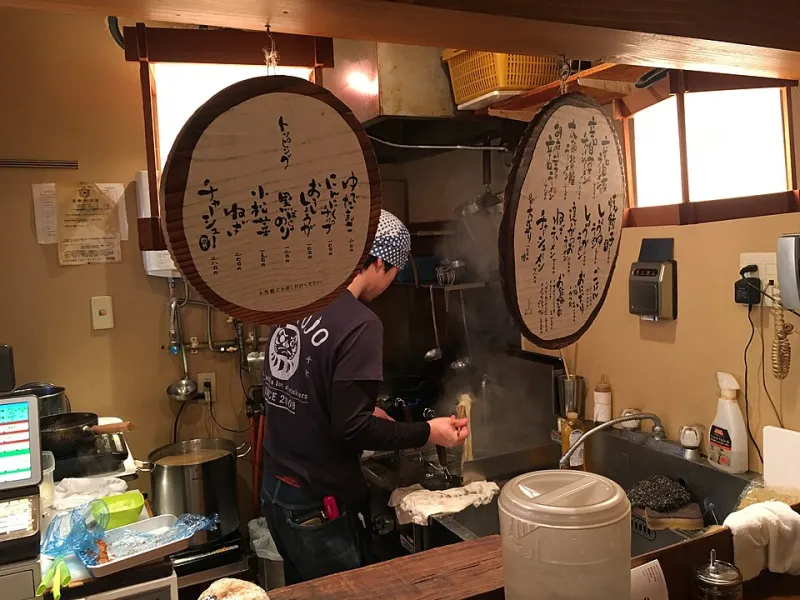
Photo: Emily Jiang, CC BY 2.0, via Wikimedia Commons
There is a particular sound a noodle kitchen makes at half six on a wet November evening: the low, percussive rumble of a stockpot that has been going since yesterday, the hiss of a basket hitting boiling water, the clack of a spider being shaken out over the sink. In most restaurants you hear none of it. In Camden, increasingly, you hear all of it — because the wall between the kitchen and the room has quietly come down.
Open kitchens are hardly new. But the noodle bars of NW1 and its neighbours have taken to them with unusual enthusiasm, and for reasons that go beyond Instagram. A ramen kitchen is a small, sequential, highly legible operation: broth, tare, aroma oil, noodles, toppings, bowl. Put it behind glass and it reads like a diagram. Put it in front of a customer and it becomes a kind of theatre — one where the audience can, if they look properly, audit the performance in real time.
What a good open broth setup actually looks like
Transparency is only worth something if you know what you're looking at. A few things are worth watching for once you've got a stool at the counter.
The pot, not the pan. Serious operations keep at least one stockpot at a rolling simmer from opening, sometimes from the previous day. Ask what time the broth went on. The answer should be a time, not a shrug.
Somebody skimming. Watch the surface for a few minutes. Someone should be removing scum and fat with a ladle or a fine sieve at fairly regular intervals. A pot left entirely alone for an hour is a pot that will taste muddy.
The noodle boiler's rhythm. Fresh or fresh-ish noodles cook in seconds, not minutes. A boiler that sits idle for long stretches, then gets hammered, tells you something about either the pace of service or the pre-cooking. Baskets should be moving constantly.
A topping station that looks like a prep list. Spring onions cut that morning, eggs marinated, chashu sliced to order rather than sitting in a warming tray going grey at the edges. Mise en place is not glamorous, but it is the clearest single indicator of a kitchen that cares.
A visible tare. Tare — the seasoning base that makes each bowl what it is — is often kept in small, labelled bottles. If you can see the cook measuring it into the bowl with a ladle or a pour, you're watching the single most important adjustment in the whole bowl being made in front of you.
Three counters worth taking a stool for
Off Kentish Town Road, there's a narrow room where the pass runs almost the full length of the bar and the stockpot is visible from the doorway. Sit at the far end and you can watch a bowl assembled in roughly forty seconds: tare, oil, broth, noodles, toppings, a flick of the wrist over the pass. It is oddly calming, and it makes the wait for a seat feel like part of the meal rather than a tax on it.
Near the lower end of Camden High Street, a counter-led spot keeps its noodle boiler facing the room and its stockpots behind a low half-wall — enough of a reveal to see the simmer, enough of a barrier to keep the splashes off your coat. The cooks there work in near silence, and the choreography between the two of them is the best argument for an open kitchen I've seen locally: no shouted orders, no walkie-talkies, just a nod and a basket.
And up towards Chalk Farm, there's a twelve-seat bar where the broth is finished in a smaller pot in front of you — a final reduction, a last adjustment, a taste from a spoon that gets rinsed and reused. It's the closest thing in North London to watching someone plate a dish at a chef's table, except the dish costs about fourteen quid and you're allowed to slurp.
Why seeing it changes how it tastes
There is a well-worn argument that food tastes better when you watch it made. That's partly nonsense — a bad bowl is a bad bowl, however theatrical the ladling. But there's a narrower, more defensible version of the claim, and it holds up.
First, visible cooking tends to enforce consistency. When a bowl is assembled in full view, portioning stops being approximate. The cook who knows the room can see them is a cook who measures the tare.
Second, freshness becomes impossible to hide. A tired broth, an egg that's been sitting out, noodles that have been par-cooked and rested too long — all of it shows on an open pass in a way it never does behind a swing door. The kitchen's discipline is on display, and so is its laziness.
Third, and least measurable: attention is contagious. Sitting at a counter, close enough to feel the heat off the boiler, changes your own register. You eat more slowly. You notice the aroma oil hitting the hot broth. You stop scrolling and start smelling. In a city that has spent a decade teaching us to eat with one hand and read with the other, that's not nothing.
The red flags, visible from your stool
An open kitchen is a two-way mirror, and sometimes what it shows you isn't flattering. Keep an eye out for broth that has clearly been sitting under a heat lamp rather than on a flame. Watch for toppings that are being plated well ahead of an order and parked under lights. If the noodle baskets are dripping into a bucket of grey water that hasn't been changed since lunch, that's your answer on the noodle front too.
And be sceptical of the purely decorative pass — the one where a single cook stands folding gyoza for the cameras while the actual ramen is made around a corner. Visible craft is only a defence against mediocrity when the visible part is the part that matters.
How to order at the counter
Sit as close to the pass as you can without being in the way. Ask when the broth went on — it's a fair question, and the answer tells you more than any menu description. Order one thing. Watch it being made. Then eat it while it's still steaming, because a bowl assembled two feet from your elbow has a very short window before it becomes an ordinary bowl of soup.
That, in the end, is the case for Camden's open noodle kitchens. Not transparency as marketing, but transparency as pressure: the knowledge that someone is watching, and that the watching is part of the pleasure. In a borough with more noodle bowls per square mile than most of the country can claim, that kind of pressure is one of the better reasons the good ones stay good.