The Shaker by the Stove: Camden's Quiet Rethink on MSG
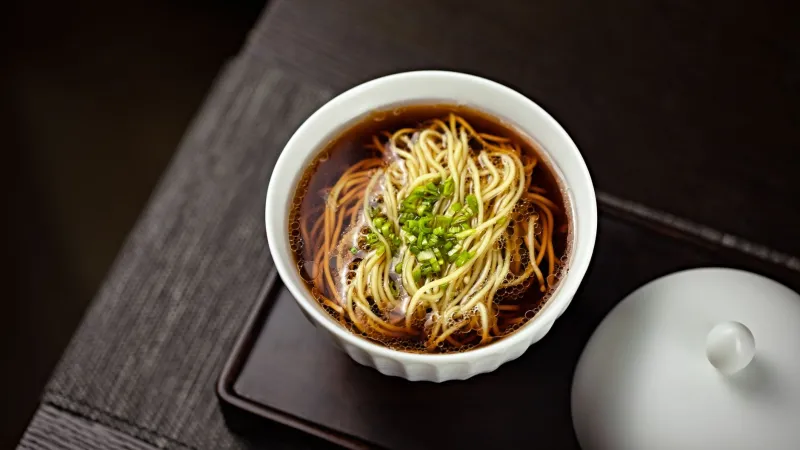
Photo: steaming bowl of ramen broth with chopsticks and a small seasoning shaker on a dark restaurant counter, via memeandchill.com
There was a time, not so long ago, when a Camden noodle menu could sell itself with two little words: no MSG. It sat under the ramen list like a halo. It implied care, purity, a kitchen that had resisted the shortcut. In 2026, that badge is looking tired. Walk through the noodle bars around Camden Lock, up Kentish Town Road and across to Mornington Crescent, and you'll find fewer disclaimers and more quiet confidence. The shaker has not vanished. It has just stopped hiding.
The badge that stopped meaning much
Part of the shift is linguistic. 'No MSG' sounds clean until you realise that glutamates turn up naturally in kombu, dried shiitake, aged miso, fish sauce, prawn shells and slowly simmered chicken bones. A pho broth built on charred onion and beef marrow is not MSG-free in any meaningful chemical sense. It is full of glutamate. The old badge was never a precise promise; it was a mood. And in a city where more people now read labels and ask questions, a vague mood is less useful than a straight answer.
The other part is commercial. Camden's noodle scene is crowded. A new bowl has to justify twelve, fifteen, sometimes eighteen quid. Claiming moral superiority through an anti-MSG badge no longer does that. Flavour does. Transparency does. A cook who can tell you exactly why the broth tastes the way it does is more convincing than a sticker that says nothing at all.
Three ways a Camden kitchen handles the shaker
Broadly, the kitchens I spoke to fall into three camps. The first uses a branded glutamate seasoning — often a Japanese or Chinese blend, sometimes a chicken-powder base — alongside bones, soy and aromatics. They use it deliberately, usually in small doses, and they are increasingly willing to say so. 'It's a seasoning, not a secret,' one cook at a Kentish Town ramen counter told me. 'You wouldn't hide salt.'
The second camp builds umami from ingredients: kombu soaked overnight, dried shiitake in the stock, a spoon of miso, fish sauce in the pho pot. These kitchens may still use a little added glutamate at the end, or they may not. What matters is that the base has depth before the shaker arrives. The third camp avoids added MSG entirely, sometimes for customer preference, sometimes because the cook simply prefers the slower route. None of these approaches is automatically better. They produce different bowls.
Dose is the whole conversation
The old fear around MSG was never really about a pinch of seasoning. It was about the idea of a hidden industrial shortcut — a cloud of powder standing in for proper stock. In reality, the cooks I spoke to talk about dose the way they talk about salt or chilli oil. Too much and the bowl tastes flat, metallic, oddly loud. The right amount rounds off a broth without announcing itself. One cook described it as 'a volume knob, not a flavour.' Another said he uses less in summer, when the broth is lighter, and more in a thick tonkotsu when the pork needs a lift.
That is not a chemistry exam. It is cooking. The trouble is that UK menus have spent decades treating MSG as a binary — present or absent, sin or virtue — rather than an ingredient with a quantity and a purpose. The result is a strange silence. Ask a server in some places and you get a nervous shrug. Ask in others and you get a proper answer: yes, a branded seasoning in the tare; no, not in the broth; yes, but only in the chilli oil.
Why the apology is getting quieter
There is also a generational shift behind the bar. Younger cooks who grew up with online food culture are less rattled by the 1968 'Chinese restaurant syndrome' letter than the people who printed the old menus. They know the science has moved on, and they know the original panic was tangled up with racism against Chinese restaurants. They are not eager to relitigate it at the pass, but they are tired of apologising for a seasoning their grandmothers used.
At the same time, Camden's customers have changed. The same person who asks about natural wine and sourdough starter is often perfectly happy to ask about glutamate. They want the full picture, not a purity badge. That is why the best menus now say things like 'contains added MSG' or 'umami from kombu and shiitake' rather than 'no MSG'. It is a small editorial choice with a big effect: it treats the diner as an adult.
How to ask without turning dinner into a chemistry exam
You do not need a lab coat. You need one clear question and a follow-up. Try this: 'Is there added MSG in the broth, or is the umami all from the bones and seaweed? And if there is, is it in the tare or the stock?' That gives the kitchen a way to answer without guessing. If the server looks unsure, ask them to check with the cook. Most places would rather you ask than sit there suspicious.
If you are sensitive to large amounts of added glutamate — or you simply prefer to avoid it — say that plainly. 'I'm not allergic, I just prefer no added MSG. Which bowls should I look at?' A good noodle bar will point you towards a clear broth, a shio or a simply built pho, rather than a thick, heavily seasoned tonkotsu. If they get defensive, that tells you something too.
The last slurp
The MSG disclaimer is not disappearing because Camden's cooks have given up on care. It is disappearing because the conversation has moved on. The interesting question in 2026 is not whether a bowl contains glutamate — most good broth does — but whether the kitchen knows why, how much and what it is doing there. That is a better menu than a halo. And it makes for a better bowl of noodles on a cold Kentish Town evening.